
Researchers receive Novo Nordisk Foundation Challenge Grant to screen for appetite-regulating targets in stem cell models
Anti-obesity therapies are often developed on animal models, which translate poorly to humans. A research project based at the Department of Biomedical Sciences receives a grant of 75 million DKK over 6 years from the Novo Nordisk Foundation to build human-centric models, which will allow for high-throughput screening of novel targets to enable the development of more affordable anti-obesity medications.
Cardiometabolic diseases, such as obesity, arise from coupled signaling across brain, gut, liver, adipose tissue and pancreas. Translation into medicines in this area remains slow, in part because animal models, which are primarily used, translate poorly to humans due to a high rate of false positives, and cannot be applied for high-throughput target discovery.
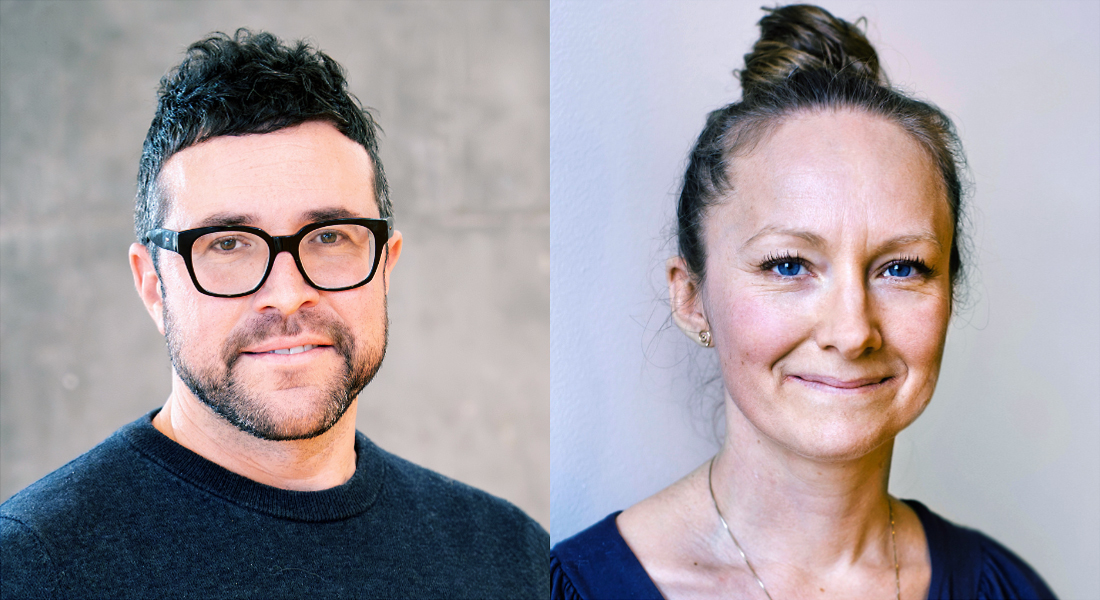
Associate Professor Matthew Paul Gillum and Associate Professor Agnete Kirkeby from Department of Biomedical Sciences (BMI) at the University of Copenhagen aim to bring solutions to this problem by building physiologically relevant and human-centric models with their project Knockout human "brains in a vat" to discover novel anti-obesity medications in collaboration with scientist from the University of Oklahoma and Yale University.
“The key gap we’re addressing in this project is the lack of a human-based drug discovery platform that connects causal appetite genetics to screening-compatible signaling outputs in core feeding nuclei of the brain,”
Testing appetite-regulating gene in a stem cell model
The gene ADCY3 is a key regulator of appetite in the brain, and the researchers will use this gene as the focus of their model-development. The researchers will apply a novel stem cell-based model of the human hypothalamus, which is the part of the brain that controls hunger and satiety. With this model, the researchers can investigate how different drugs and receptors interact with ADCY3 in human appetite-regulating neurons.
“Our studies will serve to uncover the mechanisms of ADCY3 in appetite regulation as well as to identify potential druggable targets in this pathway,”
Key findings will subsequently be validated through in vivo studies in humanised mouse models of obesity.
Making obesity treatment available to more people
By defining mechanisms directly in human appetite neurons, it will be possible for the researchers to target a bottleneck in developing more affordable, scalable anti-obesity therapies.
The hope is that the human-based models could enable identification of treatments for patients intolerant to GLP-1 agonists, which is the base for current obesity treatment. It will also be possible to identify novel and potentially more inexpensive oral anti-obesity medicine to improve global access for people who can’t afford treatment today.
“Having worked for several years in the lab and External Innovation at Novo Nordisk A/S, I came to understand the critical bottlenecks in the field of obesity drug development, and particularly the need for human-centric and scalable models which recapitulate human obesity physiology. With the help of advanced stem cell technology, I believe we can address exactly that gap and develop completely new and more efficient drug discovery pipelines which rely much more on human biology,” says Matthew Paul Gillum.
A successful integration of competences
The project is an example of how interdisciplinary scientist can benefit from each other’s competences both globally and locally.
“This incredibly generous grant from the Novo Nordisk Foundation allows us the unique privilege to dive deep into one specific research topic. Through collaboration with top scientists from the US, Noah Palm from Yale University and Huxing Cui from University of Oklahoma, we will be combining several novel and highly innovative technologies to study and model appetite regulation and obesity in the dish,” says Agnete Kirkeby.
The collaboration between Matthew Paul Gillum and Agnete Kirkeby is also new, as they recently have become colleagues at the Department of Biomedical Sciences. Kirkeby is a part of the Copenhagen Node at Novo Nordisk Foundation Center for Stem Cell Medicine (reNEW) which was integrated with the Department of Biomedical Sciences in 2025.
“I am very pleased to see this collaboration between two researchers at BMI who bring different scientific perspectives to the table. It is a great example of how the integration of a research center and a department can create new opportunities and strong research collaborations. We are now seeing the results of that effort through this generous grant from the Novo Nordisk Foundation,” says Birgitte Holst, Head of Department at BMI.
Read about all Novo Nordisk Foundation Challenge Grants 2026
(https://novonordiskfonden.dk/nyheder/ingen-lette-loesninger-europaeiske-forskningskonsortier-gaar-sammen-om-store-udfordringer/)
Contact
Matthew Paul Gillum, Associate Professor
Department of Biomedical Sciences
gillum@sund.ku.dk
Agnete Kirkeby, Associate Professor
Department of Biomedical Sciences
agnete.kirkeby@sund.ku.dk
Ingeborg Auken Beck, Communications Advisor
UCPH, Communication North
Ingeborg.beck@adm.ku.dk