
Nordic center to advance research on the brain’s cleansing system
With a grant of DKK 78 million from the Lundbeck Foundation, a new joint Nordic center is being established to strengthen research into the glymphatic system. The aim is both improved diagnostics and new approaches to the prevention and treatment of dementia.
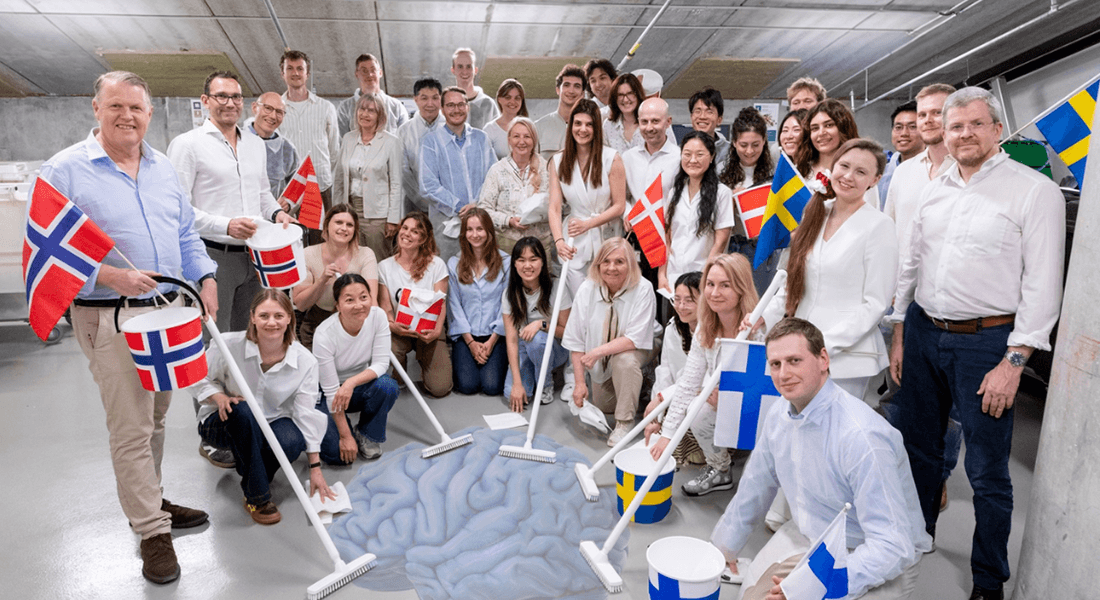
A new Nordic research collaboration, the Nordic Center for Glymphatic Biology, will over the next five years develop knowledge about the brain’s own cleansing mechanism, the glymphatic system. The center brings together researchers from Denmark, Sweden, Norway and Finland and works across disciplines. Co-Director at the Center for Translational Neuroscience, Maiken Nedergaard, initiated the center and represents the University of Copenhagen in the collaboration.
The brain’s waste management system
The glymphatic system functions as the brain’s waste management system. During sleep, cerebrospinal fluid flows through brain tissue along the blood vessels and removes waste products from nerve cells. This process is central to brain health and is suspected to play an important role in the development of conditions such as dementia when it weakens with age. Popularly, the glymphatic system is referred to as the brain’s dishwasher.
The glymphatic system was discovered and described by Maiken Nedergaard in 2012, and she has now received a grant of DKK 78 million from the Lundbeck Foundation to advance research within this field of neuroscience and prepare the next generation of brain researchers to carry the field forward.
Five research units with different perspectives
The Nordic Center for Glymphatic Biology brings together leading experts in the field, and the strength of the center lies in its broad research design, with five research units each contributing their own perspective to the project.
“The center brings together internationally recognized researchers with expertise in the glymphatic system. For some reason, Scandinavia has the best researchers in this field, and by establishing the center we can work together and more quickly disseminate our knowledge and see it applied in the clinic,” says Maiken Nedergaard.
At the University of Copenhagen, the focus is on mouse studies aimed at identifying molecular mechanisms that can regulate glymphatic flow and, at a later stage, increase the rate at which waste products are cleared from the brain. At Oslo University Hospital, researchers will use an invasive MRI technique to investigate glymphatic flow in the brains of people with vascular disease, while at the University of Oulu the focus will be on using a specialized non-invasive MRI technique, MREG, to determine how fluid moves within the glymphatic system in people who have or are at risk of developing vascular disease. At Rigshospitalet, the results will be tested using a SPECT scanner for the same purpose, and at Lund University researchers will conduct experiments on pigs focused on methods to flush the glymphatic system.
Scanning to evaluate brain health
Within the next five years, the center aims to develop a diagnostic platform - a so-called glymphogram - that can provide a status assessment of an individual’s glymphatic system.
“We will likely be able to establish a clinical platform within a shorter time frame, so that middle-aged individuals can undergo a 20-minute scan that can tell them whether their brain’s ‘dishwasher’ is functioning well. The methods already exist at the experimental level, and I expect that in the coming years a simple solution will be developed and validated so that it can also be used in smaller hospitals,” says Maiken Nedergaard.
In the long term, such an examination could be included in preventive health checks and help identify individuals at increased risk of dementia.
In addition, the research will pave the way for new treatments. By identifying mechanisms that can improve the transport of waste products, researchers are working towards developing or rethinking drugs that can enhance the brain’s cleansing function. The plan is to bring the most promising candidates forward to clinical trials.
Educating the next generation
An important part of the center’s mission is also to help build a new generation of researchers with expertise in the glymphatic system.
“We will focus on how experienced researchers can support younger researchers who are on their way to becoming independent. So, when the grant expires in five years, I hope that the younger researchers will be self-sufficient and able to build their own networks to carry the field forward,” says Maiken Nedergaard.
By creating strong academic networks and interdisciplinary environments, the ambition is to ensure that the field continues to develop and contribute to future treatments.
Contact
Dr. Maiken Nedergaard
M.D., D.M.Sc.
nedergaard@sund.ku.dk
Phone: +45 3533 2231
Ingeborg Auken Beck
Communications Advisor
Ingeborg.beck@adm.ku.dk